Category: Uncategorized

  • Getting It First or Getting It Right

    We talked yesterday about Dr. Reynolds’ CERC model for emergency risk communication (and what a huge fan of the curriculum I am), and the three main tenets: be first, be credible, be right. Sounds good in a training, and it reads wonderfully as a best practice, but how doable is it really?

    Turns out not so much. And the Boston bombings were a perfect example of the tradeoffs made when folks, including the media, try to do all three at once. Being first is easiest, being right is hard (and frankly, can be a moving target), and credibility suffers if you mess up either of the other two. Unfortunately, examples of failure can be found on just about any day from that week. From the reports of unexploded bombs being found, to inflated death counts, to mistaken accusations, to reports of the second bomber being caught (before he actually was, obviously). A lot of this can be attributed to the fog of the situation, but how much went unverified because it was too much work to untangle the less-than-truths, and besides it’s so darn foggy, anyways.

    Most of the late night joke fodder centered around the mass media (especially CNN and the New York Post), but I think we’ve all got some skin in the game. How many of us didn’t check multiple reports before retweeting something? I could give the blow-by-blow, but it’s too sad. A simple Google search for, “news organization got it wrong in Boston,” is depressing enough.

    It got so bad that the FBI had to release a statement–like some small-town sheriff dealing with an overzealous national media for the first time–admonishing the press. The Boston Police, like experts in crisis communications, took to the source of many of the rumors, Twitter, to try to unring the social media bell.

    The problem is that while we understand that unsourced social media reports aren’t to be necessarily trusted, the media, in their rush to be first, are starting to depend on these breaking news reports as initial sources. So when CNN says something’s true, it lends an air of credibility to something that’s little more than a rumor. And those reports have real consequences. One only needs to look at the market drop that followed the AP’s hacked tweet on a bomb at the White House.

    More seriously, reports of a “dark-skinned” suspect lead many, including the junior crowd-sourcing detectives on Reddit to mistakenly finger Sunil Tripathi, a missing college student. Just this week, Sunil was found dead (apparently not connected with the witch hunt). The editors and owners of Reddit thought this such an egregious act, they subsequently published an apology and reviewed their longstanding policy of not allowing g personal identification anywhere on the site. All in the name of getting it first.

    The news isn’t all bad, though. Organizations like CBS and NBC and the New York Times got props for doing it right. Speaking of the Times, this whole episode reminded me of an article I’ve been saving since December. The Public Editor of the Times, after the Newtown shooting and there were similar calls for a return to real journalism, published an article that said this:

    In the future, [reporter Wendy Ruderman] would prefer that everyone adhere to this rule: “We shouldn’t put anything in the paper without a name attached to it.” In other words, there would be no reliance on anonymous law enforcement officials.

    Which I think is a pretty cool thing to say. But my favorite part is this:

    The Times can’t get pulled into the maelstrom of Twitter-era news. It has to stand apart from those news sources that are getting information out in a fast, piecemeal and frequently inaccurate way. That process has its own appeal and its own valuable purpose. But The Times should be its authoritative and accurate counterbalance.

    Because in a world where being first too frequently leads to disaster, being right is the most valuable thing a news organization can do. That’s where their credibility comes from, that’s the hook that will move mass media into the future. They will never compete with social media, and they shouldn’t try to. As one of my favorite Tweeters said:
  • Which Disaster Will They Cover

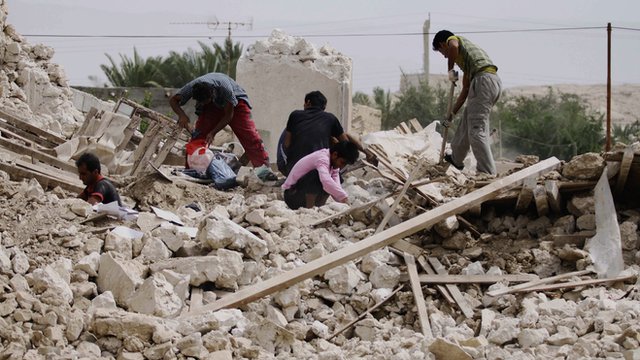
    _66974275_66974274Things have been either really tough for folks who work in risk and crisis communications recently. Between the absurd flooding in upper Midwest, the explosion in West, Texas, and the Boston situation, it’s been a busy couple of weeks. Add to that the bioterror attack on the Senate and White House, the earthquakes in Iran and China, H7N9 influenza and insanely unusual snow in Minnesota, one should have their pick of hazards to message on!
    We only have to turn on cable news or flip open a national newspaper, or search on Google News to see the havoc being wrought… Wait, not really. Where’s all of the information about Chinese earthquake? Do you know, without looking, the final count of dead in West, Texas? What city is worst flooded in Michigan? Did you know the FBI released their suspect in the ricin letters case? The Elvis impersonator?

    It’s really hard to find any of this information, but why? Sure, the Boston bombings, manhunt and region-wide lockdown are HUGE news stories, but are they the biggest story? Certainly not in terms of deaths, or property loss, or scope, or scale, or weirdness, heck, that’s not even the only terrorism that happened that week! So, why is the media focusing so singularly on the Boston situation? Is there a reason why, and if so, what can we learn from that?

    The cynical among us would say that it’s because it’s Boston, and it’s got five-star hotels and bureaus for all of the major networks, so it’s easy to get the best reporters there. And on it’s face, that’s not really a bad answer. West, Texas is REALLY hard to get to, especially in the dead of night. Sichuan, China, even harder. The Iranian/Pakistani border, almost impossible. But that doesn’t really explain the ricin (it happened in Washington, DC, for Pete’s sake!), or the Midwest flooding (there’s still a few pretty big towns up there, I’ve heard).

    I think the problem is more squishy than comfort and not using airline miles. I think it has to do with the situations themselves, specifically how they’re perceived.

    Risk perception is a crazy thing. Dr. Barbara Reynolds, founder of the Crisis and Emergency Risk Communication (CERC) model likes to tell the story of what to worry about in Hawaii. Quick, in Hawaii, what do you think is the greatest hazard? If you said sharks, you’d be, well, normal but also wrong. Coconuts, now there’s something you need to be afraid of. There are reports (though completely unreliable, and I don’t really believe it) that coconuts kill 15 times as many people per year than sharks. The reason we fear sharks is because they are unusual and attract media attention. Coconuts? Not so much.

    Dr. Sandman (our dear old friend), has a great table to help us see what causes some topics to engender high perceptions of risk, and others lower. On that table, we see that when comparing Boston to West, Boston is more likely to cause increased public concern due to Familiarity, Understanding, Voluntariness (remember that most of the West deaths were responders), Effects on Children, Dread and Origin. And when comparing Boston to the Midwest floods, well, there’s just no comparison. And the ricin letters, frankly, didn’t cause any deaths–they were handled by competent responders and systems–almost became background noise. Overseas natural disasters are almost always reported as “statistical deaths” and are thus harder to get riled up about.

    So, what can we learn from this whole disaster-filled April? A couple of things. First, not all disasters are created equal. Some are worse, and some are just perceived as worse.

    When you have your disaster, make sure you can step back and see where yours falls on the continuum. Second, the media will pick and choose which disasters they report on. We’ve talked about this before, specifically during tornado season. Be ready for the media to pack up and high-tail it out of there when something “better” comes along. Likewise, if the perception of your disaster changes, be ready for a huge surge of interest at any point during your response.

    The media may be a fickle partner, but that doesn’t mean that there’s not some science behind it all.

  • Frivolity and Connections

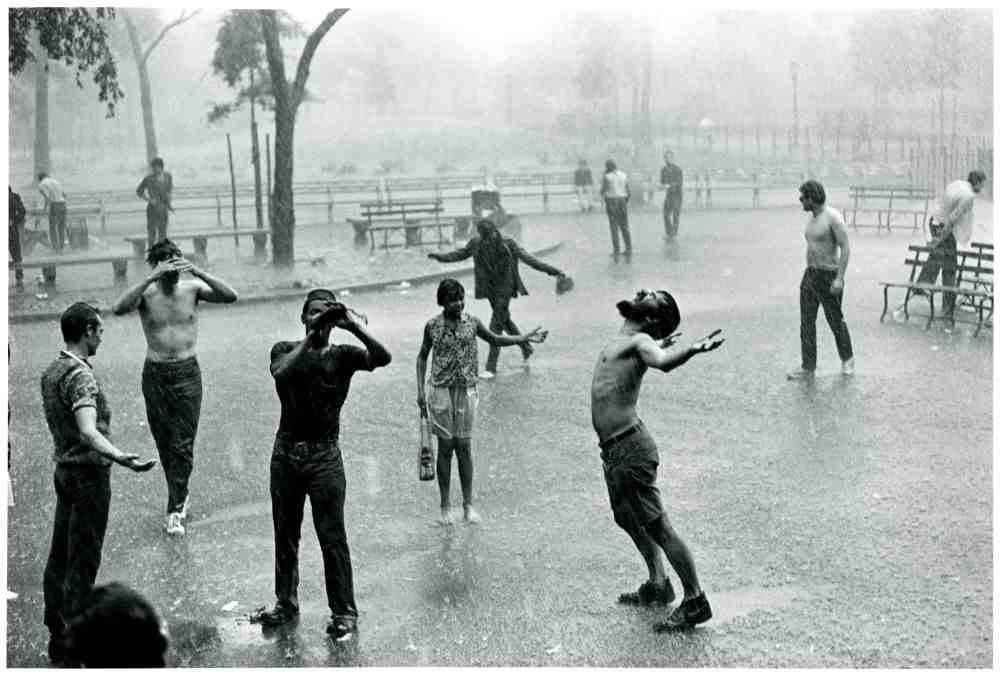
    rainThose of you who have known me for a while know what a sucker I am for serendipity, for unplanned happenings that benefit everyone, for luck. Planning can so easily turn into planning oneself to death.

    I’ve written about serendipity twice on this blog, and I’m sure I will again soon. Today though, I wanted to talk about the second part of that equation: lack of planning. Yes me, the disaster planner, telling you, disaster planners and communication experts, to stop planning. But I have good example that I wanted to highlight that shows how going “off-message” every once in a while can be beneficial. (and it’s nearly a year old example; I’ve been holding on to it for that long!)

    I’ve done some writing for a British blog that, frankly, every risk and local government communicator should be following: comms2point0. (What’s up, mates!) Last summer, they had a guest post talk about a single Facebook post. A short video of a rainstorm:

    The clip showed the steps outside St Peter’s Church in the city centre after they had been turned into an impromptu waterfall following a torrential rain storm. It was just 16 seconds of footage, shot on my phone under the cover of my trusty umbrella as I ventured out into the deluge.

    I decided to head outside after first seeing the ‘waterfall’ from the office window. It was an impressive site and in six years working here I had never witnessed anything like it. As a former journo, instincts took over and I figured that if something out of the ordinary was happening it would be worth sharing it. It was a spur of the moment, gut reaction thing. Not planned, not thought up in a meeting or devised as part of a strategy.

    The post went on to be their most successful Facebook post, by an insanely large margin, and the views continue to rise. For sixteen seconds of rain and flowing water. The author sounded just as amazed at the success as you might be:

    The video was not designed to promote the work of the council. There was nothing on it to indicate that it had any connection with the council. People may question what then was the point of posting it, how did it help us to fulfill our departmental aim of enhancing the reputation of the authority?

    The bottom line, I believe, is that if you want your social media sites to make an impact for the right reasons, you have to give people a reason to come and look at you. It sounds simple and it is. Content really is king.

    The video was successful because it wasn’t a typical government post. It wasn’t staid and planned and metricized and approved and massaged. It was something that a real person found interesting and wanted to share with his friends. It was frivolous. And that frivolity is what made the public connect with it.

    No one is all business, all the time. (Not even your boss.) They like to connect with people. People that like interesting things. Sure, a video of rain won’t benefit your organization directly, but it will create a connection. A weak tie. (Which can be one of the most powerful things in the world, see this classic article by Granovetter.[PDF]) And who knows what that connection will give you someday.

    Now think about your own agency’s social media presence. When was the last time you were frivolous?