Category: Uncategorized

  • Social Network as Disease Support Network

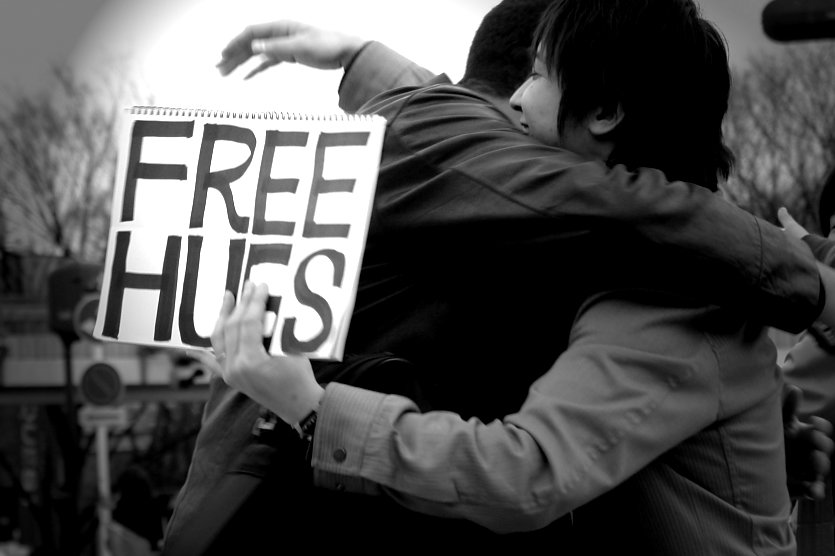
    free-hugsThe news is full of stories of celebrities living succeeding with chronic diseases. Michael J. Fox is perhaps the most famous, but Angelina Jolie placed herself firmly in that camp with the recent revelation of her double mastectomy.

    In many cases, this type of attention can be a good thing for folks living with these conditions. It brings attention to the disease, prompting research dollars, but it can do more for the public. It’s much easier to say, “You know the tremors that Michael J. Fox has? I have something like that,” as opposed to, “No, no, say it like this: dis-tone-ee-ah.” Their admission of sickness helps to normalize that sickness. People live, breathe, are happy and succeed while living with chronic conditions and now you can learn about that on the cover of People magazine.

    The problem is that there’s a lot more chronic conditions and rare diseases than there are Hollywood celebrities. So what do these admissions do for people with Amyloidosis, perhaps, or Sjogren’s Syndrome, or Fabry Disease? Previously, they were relegated to awkward discussions with friends and family members who could never understand what Multiple Sclerosis feels like, but today, with the advent of online social networks, many people living with these types of conditions are finding each other.

    Evidence for this amazing virtual support community is everywhere. For example, this recent article in the Chicago Tribune highlights one woman’s use of social networks to deal with Spontaneous Coronary Artery Dissection:

    Stricken in January 2011, McGarry left the hospital after five days feeling isolated and confused. Finding information about the ailment — spontaneous coronary artery dissection, or SCAD — was difficult, and doctors were unable to help, she said.

    McGarry eventually discovered a thriving online community that provided details about her condition and, more important, encouragement. With a few clicks of a mouse, she plugged into a wealth of information and support.

    From as far away as New Zealand, Australia and the United Kingdom, these survivors are part of a patient-driven revolution in the world of rare diseases, who mobilize through social networks, experts say.

    One of my favorite healthcare focused websites posted this year on how the rare diseases included in their Healthcare Hashtag Project have helped people, and one of the sites authors lamented how he wished he had this resource at his disposal when he was diagnosed:

    My diagnosis was confirmed following an MRI to rule out anything else, and a visit to the neurologist. However, even he, who had been in practice for 26 years, admitted that I was only his second case. And when I showed up for my first day of physical therapy I couldn’t help but wonder what I was facing. How long was my own recovery going to be? No health professional that I was encountering (urgent care physician, family physician, neurologist, or physical therapist) had any experience with my rare condition.

    So I again turned to Dr. Google.

    Desperate for answers, and even more desperate to hear from someone (anyone!) who had already gone through what I was facing, I Googled my diagnosis every way imaginable. What I found was the same generic description that showed up in different formats on different domains.

    I felt completely isolated. I felt depressed. And, quite frankly, I was scared.

    Today, though, finding that support is much easier through networks like Ben’s Friends and PatientsLikeMe. As health communicators, it’s our job to know that these types of support exist. While it would be helpful for us to let the community know about these resources, I think that our main concern should be letting the healthcare providers know about them. When a doctor gives a diagnosis of SCAD, their next sentence should be about these supportive networks. Given how inter-related social support and mental health and mental health and physical health are, it’s shameful that we don’t do more to facilitate these types of connections.

  • Skagit Bridge Collapse Public Information: Overview

    Skagit Bridge Collapse Personal Lessons Learned
    Marcus Deyerin
    PIO
    Northwest Washington Incident Management Team

    Quick-Tips to remember

    • Back-up power was critical. I’ve carried around a NewTrent 12KmAh backup charger in my PIO bag for several months, and used it a couple times prior, but this is the first time it seriously saved my bacon. I recharged my phone from near dead 3 times over the course of my involvement during the response. It’s worth every penny. [There are certainly other brands/models out there – this is just the one I have]
    • Good shoes / boots are important. Most responder types normally wear these, but I was a little surprised by how many people I saw who were wearing what I would consider “questionable” footwear. It’s the rare exception when I’m not wearing my RedWing 406s, but I was really glad I had them that night there on the riverbank.
    • Food matters! It’s a cliche about bad food – or rather – food that’s bad for you (e.g. donuts, candy, etc.) in an emergency operations center, and this was certainly no exception. We did have access to some veggies and other good food as well, but it takes a disciplined soul to avoid overdosing on the sweets in stressful environment. But it really does make a difference. If there’s not enough healthy food where you’re at, ask for some, or go get your own.
    • “And that’s why you always carry a flashlight!” Really…this applies to anyone, anytime, anywhere. My current personal favorite for everyday carry is a Fenix LD12, and I use it every single day.
    • PIO armband (or hat, or vest, etc) – something to clearly mark yourself as the PIO. Wish I’d had one – would have made getting the attention of the media at the scene a lot easier. It’s now on my to-do list.
    • Orange vest, or dedicated yellow jacket. Having one of those inexpensive lightweight vests in your go-bag is a good idea. Some people have dedicated neon jackets (which are also nice) – but which may not be comfortable in warmer environments.
    • My big mistakes (Ed. note: Even Marcus made some, but in the grand scheme of things, these were minor. It’s good that we acknowledge those mistakes so we can learn from them.)
      There are two incidents for which I carry some angst. The first came around 8:45pm, when the third media phone call I received came from a student reporter for The Western Front, the campus paper for Western Washington University. [Full disclosure: I am periodically contracted by WWU as an adjunct instructor]. This student reporter of course wanted to ask about the bridge collapse. I don’t specifically recall where the first two media calls were from, but they were what I was expecting (regional or national news agencies). I knew the other regional and national agencies were probably getting a busy signal at that very moment, and I panicked. I told the student that I had to step into a quick meeting, and I’d try to call him back.

      That’s right… I lied. It wasn’t a fib, it wasn’t a white lie; it was an outright damn lie.

      And I feel horrible about it. But here’s the truth – I would do it again (put him off until later) – although here’s what I hope I would say next time: “I would very much like to answer your questions right now, but I need to focus on those news agencies that are going to reach the broadest audiences at this very moment. Please give me your phone number so I can call you back later tonight.”

      My clumsy ducking of this erstwhile student reporter was the only untruth I knowingly spoke during this incident. But as the subsequent media calls came in, I found myself semi-consciously assessing these various news organizations against the audiences I felt were most important in those early hours. Obviously, my priority “customers” of information were every commuter that traveled on I-5 through Skagit County, whether that was for work, travel/vacation, shopping, freight transport, etc. Then of course there was the immediate implications for the surrounding communities – which was already experience a significant traffic spike as I-5 was detoured into their side streets and roads. Nevertheless, I didn’t cut short any other media calls that night (even the one from Japan), perhaps if for no other reason than because of my lingering guilt about the student reporter.

      Unfortunately, there’s no easy answer when it comes to prioritizing who you talk to or in what order. Every reporter is important, but truthfully, some audiences are more important than others.

      Daniel – or whatever your name is – if you’re reading this, I am sincerely sorry, and I’ll figure out a way to make it up to you. Get in touch.

      My second big screw-up came around 11:30pm or so. A producer for one of the regional news radio programs (KOMO I think) called and asked if I could do a live interview at 5:45am the next morning. “Sure!” I said. “I put it on my calendar [mobile device] – so just call me at this number.” Except I didn’t get their number to call back if there was an problem. At around 1:30am Friday morning, WSDOT took over as lead PIO for the incident. This transition wasn’t as smooth as it should have been, the outcome being that I didn’t inform the new PIO about the commitment I’d made to KOMO radio. That oversight and mistake was entirely mine. By the time I got to the nearby home of a colleague who had offered me a bed for what remained of the night, my exhausted brain simply forgot. I turned off my work phone (knowing my team still has my personal phone # if they really need me), and was asleep by about 3:10am.

      At 5:57am Friday morning, I sat straight up in bed. I never wake up like that. But my brain knew what I’d done, and I grabbed my phone off the bedside table. Sure enough, six missed phone calls from KOMO. I tried calling the number back, but ended up in a generic mailbox. Finally at 6:28am they called again. ” Hi, this is [?] from KOMO radio…”. I apologized profusely, explained I was no longer the appropriate person to do the interview, and then provided them the contact info for the new POC (which unbeknownst to me had already changed by then). Again, I felt horrible, but they were very gracious and understanding, “hey, don’t worry about it. It happens.”

      Your most important support resource
      If you are in any job where the phone might ring in the middle of the night and you’re expected to respond, then you probably already know that your family is your most important personal asset, followed closely by your friends and trusted colleagues. While I had been able to give my wife a heads up about the bridge collapse while I was on my way to it, by the time it was clear I’d become involved in the response both the phones and SMS were down. Even though I couldn’t call out, fortunately I was able to receive a call from a friend who was out of state at the time wanting to know if I’d heard about “this bridge collapse thing.” I very quickly asked him to call my wife, tell her to come pick up my son, and where to find us. When she arrived, she said, “Grab your bag out of the back.” I had completely forgotten to ask her to bring my incident deployment bag (the big one with extra clothes, sleeping bag, etc.). But she hadn’t forgotten. She had my back, she knew what I would need, and most importantly, I knew I didn’t have to worry she’d be upset if she didn’t hear from me anytime soon. She’s got it covered.

      Your team
      As the PIO you often end up as the face of your organization. I’ve always felt if that happens, then I’m not doing it right. I’m from the school that 95% of the PIO’s job is to coordinate information from behind the camera. But in this instance, it was the other 5% that characterized my participation that first night. In either case, the PIO is one member of an otherwise large team, and that team places an enormous amount of trust in you to accurately represent their efforts and work towards “fixing the problem.” That’s where the real magic happens – inside the incident command post, or the emergency operations center, or on the hood of a truck, or right there on the river bank.

      I am privileged to work with a truly exceptional group of people on the NWIMT, and I value their trust in me. Fourteen NWIMT members were activated for this response, and served in critical roles. I’d especially like to acknowledge our team incident commanders Tod Gates (Interim Fire Chief for the City of Lynnwood), and Brad Reading (Assistant Chief Snohomish County Fire District 1) who were the last members of our team to demobilize. I also want to thank Mount Vernon Fire Battalion Chief Mike Voss, the on-scene incident commander, for the opportunity to support their efforts in those early hours.

      Finally (no really – I’m almost done!), no list of gratitude would be complete without acknowledging the volunteer organizations that support both responders and the public affected by these types of incidents. The local chapter of the American Red Cross made sure we were all fed and hydrated at the incident scene, and the number of volunteer search and rescue teams on standby was astounding.

      So that’s my story. All things considered, our regional community was pretty lucky. Yes, we’re going to have a traffic problem for awhile; and yes, there are likely to be some significant economic consequences as a result, which will have a direct region-wide impact on large and small businesses alike. But the fact that we had no loss of life or more extensive injuries given the severity of the damage or the time of day is truly remarkable.

      My role in this incident response was minor and brief, but it was certainly a significant experience for me personally. If you’re a seasoned PIO, you already know all this stuff; maybe you’ve even learned it the hard way. But if you’re a new PIO, I hope what I’ve shared gives you a few more tidbits to jot down in your notebook.

      —–

      I just want to stand back and thank Marcus for so many things. Allowing me to post his thoughts on what was an amazing, successful, live-saving response. And for his role in that response. He is, and has always been a professional’s professional, and I’m honored to be his friend.

      He’s asked me a few times to tone down the, “best practice,” and, “one-of-a-kind,” language I’ve been using to describe what he did, but truthfully I cannot. While others have responded as successfully as he did, and utilized new technologies and tools like he did, no one has been as open and public and forthcoming with their lessons learned as he has been.

      No one’s response was tracked by so many people around the world, not just for how the response was going, but for how his actions were being done. He responded to the bridge collapse with not only the eyes of the media watching him, but nearly the entire emergency management field. Much like the public, we now train our eyes and cameras and Twitter accounts on the responders and pass judgement not only on the response, but the manner in which it’s being conducted. Truly, what we say now is as important as what we do.

      Thanks again Marcus.
  • Skagit Bridge Collapse Public Information: Media and Coordination

    Skagit Bridge Collapse Personal Lessons Learned
    Marcus Deyerin
    PIO
    Northwest Washington Incident Management Team

    Media
    Trooper Mark Francis, the Washington State Patrol PIO for this region, tweeted out my phone number for media at 8:38pm. The first incoming media call occurred at 8:40pm, and then it was then was non-stop until about 10:30pm. This is reflected in the drop-off in my tweets during this period. Again, if I had utilized both of my phones, I probably could have worked a few more tweets in during that period.

    Common media questions that were (and will always be) difficult to answer:

    Q: What was/is the condition of the patients/victims?
    As someone who works in the public health field (my day job is an emergency manager for a local health department) – I am acutely sensitive to HIPAA restrictions on the release of patient/victim information. In that way, it puts me at a disadvantage because I can’t claim ignorance in the same way another PIO might be able too if they over-shared patient information. However, I can’t honestly say I know what the bright shiny line is in regards to protected patient specific information in a crisis situation. In the absence of that precise knowledge (although I’ll be doing some homework), I try to look at it from the perspective of a family member. If I were at home, and I recognized one of those vehicles in the water as belonging to my spouse, sibling, child, etc. – would I really want to hear anything but good news from some random guy on the TV? I’ll never forget a colleague who worked in disaster mortuary affairs that once said, “Anderson Cooper has done more death notifications than any medical examiner in the country.” And he didn’t mean that in a good way.

    Personal lesson learned: if I can share good news in a generic way, I will (e.g. “the driver of vehicle X was walking on their own – but otherwise I’m not familiar with [or can’t disclose] the extent of any injuries they may have sustained.”). But I will never speculate about someone’s medical condition when it’s unclear, and whenever possible, bad news about any specific individual should be delivered by medical professionals directly to a victims family. I know that’s not always realistic – but I personally think it’s a goal we in the public information field should aspire towards.

    Q: How many “X”…
    The media seems to have a fixation with numbers. I’m not certain why that is – perhaps it’s some kind of recognizable yardstick by which to compare one disaster with another. I personally find it a little annoying and unhelpful in the immediate context, unless it has a direct bearing on the public’s safety. But it is what it is, and it isn’t likely to change.

    Personal lesson learned:

    • Be prepared to offer numbers for something – anything; but emphasize these are estimates and likely to change (because they almost always do).
    • Know the difference between estimating something and speculating (i.e. guessing). This distinction will be different for every individual based on your personal knowledge base and experience. For example, I felt comfortable estimating the depth of the water where the bridge collapsed based on what I saw; but for me to make any statements about the extent of someone’s injuries, or what caused the bridge to collapse, would have been pure speculation. Consider the difference between “I saw these two people walking on their own” [factually accurate] vs. “I saw them walking, so I think their injuries aren’t that bad.”

    While the two questions above were the most common, there were many more I received that I simply wasn’t in a position to answer, either because I didn’t know (common), or because I just wasn’t the appropriate person to answer, or both. When that happens, all you can do is say “I don’t know but I’ll try to find out, or direct you to someone who may know.” This is where interagency coordination comes in (more on that below).

    Peeves:
    I only had one frustrating experience with media…and that was boundaries on time. Once the phone started ringing, it didn’t stop for over two hours. I actually think it would have been longer had there been more severe injuries / fatalities, or if the incident had occurred earlier in the day. Ninety-five percent of the reporters I was able to connect with respected that I had a limited amount of time to offer them on the phone. But there were two who stood out as remarkable exceptions. One asked the same three questions, over and over. It was almost as if she was expecting a different answer each time, or just trying to keep me on the phone for the sake of it. Another was obviously hand-writing every single word I said verbatim (or typing really poorly), and kept asking me to repeat what I’d said so she could catch up. I really wanted to suggest she learn short-hand, or buy herself a recorder; but I bit my tongue knowing I was making my own mistakes as well.

    Now the good news. The media I engaged with were very professional. There were a number of times when they had every right to be frustrated themselves.When the incident commander established a restricted area around the bridge for safety reasons as well as to ensure responders had the space needed to do their jobs, the media respected that, even though it took away their best visual vantage point of the collapsed bridge. I was able to get the IC to open up a portion of the river bank for media to get their camera shots (but still not accessible to the general public); but even if the IC hadn’t agreed to that, while they may not have been happy about it – I’m confident the majority still would have respected the boundaries without cajoling from law enforcement.

    Later that evening, there was mixed messages sent out about where the Governor would be doing his initial press briefing. We had media staged on both sides of the river, and of course the Governor’s team came to the opposite side of where the media were expecting him (not intentionally – it just happened that way). Because there were some media there, that’s where he conducted his first on-camera statements. But once the Governor’s team learned about the confusion regarding the briefing area, they also did their part and travelled to the other side of the river to conduct a second briefing in the more formal location that had been prepped for that purpose.

    I know these things sounds fairly trivial – but in the moment I was expecting at least one media type to express some frustration, but it didn’t happen. Again, the media I encountered were professional, polite and understanding of the challenges I and the other agency PIOs were dealing with.

    Agency PIO Coordination
    In a multi-agency response, the establishment of a Joint Information Center (JIC) is an imperative, and by Friday morning that element was in place. But in the early hours of this incident, a big challenge I encountered was the inability to coordinate in the field with the other PIO or agency reps I needed to. Had the phones been working, this would have been much easier. But even then, there were a lot of moving parts at the scene, spread out far enough (and in some cases separated by a fairly substantial river) to render the coordination and sharing of rapidly evolving information difficult. The best example regards the truck and driver that Washington State Patrol were investigating as having a possible (now confirmed) link to the bridge collapse. Media helicopters could clearly see WSP troopers converged around this vehicle, and they were asking me what I knew about it – which was nothing. By the time the media on scene were done with me and I had a chance to re-connect with my WSP counterparts, there wasn’t much else I could share with the media regarding the truck that they didn’t already know at that point.

    Even if the phones had been working, I don’t think I was really prepared with a strategy to connect in the field with the number of agency reps I would have liked to spread out over a 1/2 mile radius (or 2 miles if you count the physical location of the EOC and JIC). From a personal lesson learned standpoint – I don’t have one other than the nature of the challenge itself. It might be tempting to say it’s a technology problem (the phones were down); but it’s an organizational challenge too. At one point I’d estimate there were at least 300 responder types on scene (fire, police, search and rescue, WSDOT, Coast Guard, even federal customs and border protection). That’s a lot of agencies to try and gather information from as the on-scene PIO. I’m still working on figuring out a good strategy and solution to address this (of which the VOST concept may play a part), and I’m certainly open to suggestions.

    —–

    Tomorrow wraps up our coverage of the Skagit Bridge Collapse Public Information response by Marcus Deyerin. We’ll be talking some overview, some wrap-up, some mistakes and the most important part of any response.