
Category: Uncategorized

  • I Still Can’t Understand You

    confused-face1Last month, Ivan Oransky of ReutersHealth published a piece on a new article in JAMA Internal Medicine that looked at the quality of patient education materials.

    And what they found wasn’t pretty. The researchers downloaded online materials from sixteen different disciplines in an attempt to see which medical discipline was best at crafting materials that their population could understand. Unfortunately, none of them were very good at it. Plain language and health literacy best practices dictate that we should be writing for a fourth- to sixth-grade reading level. The researchers found that the reading levels:

    fell anywhere from ninth grade to the sophomore year of college.

    This, in itself, is bad enough, but the article goes on to say that many of the downloaded materials depend on cliches and passive voice. Passive voice is a tool used by researchers and academics in an attempt to separate themselves from the work, to continue to stand objectively aside from the topic. The vast majority of the public, though, find this voice to be confusing and indirect.

    But for me, the passive voice and too-high reading level can be fixed, I think. The cliches, on the other hand, are worrisome because:

    “You go from region to region in the U.S., people aren’t familiar with what each cliche refers to,” said [study author] Agarwal.

    This is problematic because of what our government communications teams look like these days, especially at the local and state level. We don’t have the time or staff we need to craft, refine and perfect our documents. So, we depend on help from other professional and governmental organizations to help fill in the gaps. My emergency friends reuse stuff from the American Red Cross and FEMA. We, in public health, use CDC materials (some of us even let the CDC publish right to our websites!). And the cliches that they use might not translate to your neck of the woods. It was probably written in Washington, DC or Atlanta and those places can be very different from where you live.

    Take, for example our earlier discussion about tornadoes and what you should do when the siren goes off. If I wrote advice for getting to a safe place, I’d say run to your basement, because I have a basement, and so does everyone else I know. For people in Moore, Oklahoma, though, that advice is useless.

    So, my call to you, communicator-brethren and friend-of-communicators, is this: take advantage of the amazing free resources available to supplement your messaging portfolio. But before you hit the publish button, make sure to review them. Look for, and update, turns of phrase that seem out of place. Look for, and fix, language that is confusing. Get rid of the jargon and speak like your audiences speak. Having confusing or unreadable information available is just as bad as having no information available.

  • Paying Attention at Conferences

    textiingI’m very lucky to get the opportunity to attend a number of conferences, both because of my speaking engagements and because I work in an active region that regular holds opportunities for learning for members of the emergency response community. And I know that I’m lucky, so I take every opportunity to attend these conferences and trainings and do my best to share what I’ve learned as widely as I can because I know that not everyone is as lucky as I am, but they still have the need to learn about these topics.
    And sometimes that can be problematic. You see, after the conference or training, I have to go back to work and back to blogging and back to my family and life. I don’t have the time repackage and redistribute this information. So I do it in real time via Twitter. And that’s problematic because I’m usually staring at my phone or tablet and typing furiously.

    Think of the last time you were in a conference and saw someone pounding away at their BlackBerry. What did you think they were doing? Did you roll your eyes and wonder why they even came to the conference? Yep, that was me livetweeting.

    Livetweeting. Hearing what’s being presented, digesting it, repackaging it to Twitter length, typing it up on a tiny phone screen, adding a hashtag (sometimes adding pictures) and posting it. And doing it quickly enough that I can accurately represent what’s being said and being sure to get all of the really good parts. So not only am I not not paying attention, I’m probably paying more attention than many of the glassy-eyed folks who gets the the benefit of the doubt with regards to “paying attention.”

    And I’m not the only one that does this, in fact, the younger your audience the more likely they’ll be devoting time during presentations to digital devices. So what does that mean for, in each of the three roles you fulfill around presentations: as speaker, as a member of the audience, as someone who is not even at the conference.

    First, as someone in the audience, this should be easy to deal with. The person sitting next to you tweeting away has identified themselves as someone who is a) taking lots of notes and b) very happy to share it. Say hi. Give them your card. Ask where you can find their notes and if you can download them. (And if they’ve just been playing Plants vs. Zombies for the last hour, they’ll totally be shamed into paying attention during the next session.) Voilà! Instant notes and a new colleague.

    As a speaker, here you might need make some changes, but all of them are positive. First, every recommendation about how to improve presentations you’ll find talks about presenting less information on slides and focusing the content. This helps your livetweeters get the gist of the slide more quickly, but it will also helps your non-tweeting audience digest and integrate your presentation. One idea per slide. Plain language. Descriptive images. Your livetweeters will love you, your audience will love you and you’ll be a better presenter.

    The second great reason speakers should embrace social media is all for them, they’ve got the opportunity to get real, free, unfiltered immediate feedback on their presentation. Sure it’s difficult to see it while you’re presenting (even I haven’t mastered that–yet), but if your audience all used a hashtag (maybe one that you recommended to them) think of how easy it would be to collect all of those notes into one place. What a great repository of real-time feedback on your performance, kudos you’ve received and a contact list of folks who were interested in your topic enough to come and listen to you.

    As an outside observer, people using social media conferences is simply the bee’s knees. You’ve got the world at your fingertips, all you need to do is follow along. Look for the announced hashtag for the conference you find most interesting and check it out to see if anyone is tweeting during the conference! If you’re stuck for topics to follow, check out the Healthcare Hashtag Project, where folks register conference hashtags and help get a transcription of them.

    The reason I bring this topic up is because of a conference I recently attended. The conference was actively advertising their hashtag and having their staff livetweet vociferously. And yet there were still complaints from folks in the audience deriding those on their phones. Which I think is a shame, for all of the potential good reasons above. What do you think about livetweeting and using social media during conferences? (And I’d love to know if you hate it!)

    EDIT: someone did an academic research study on this! (PDF)

  • Virtual Protesting

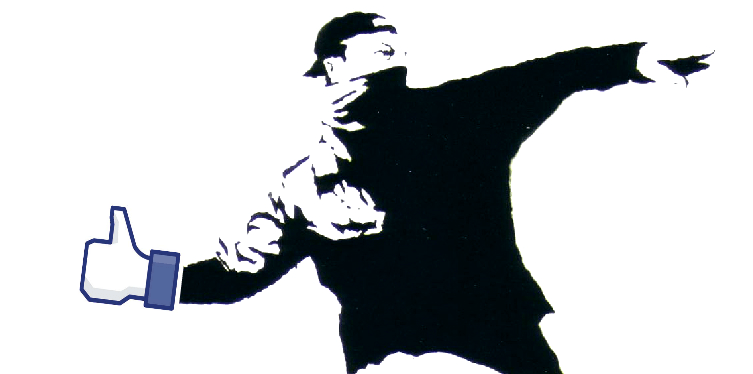
    slackI’m willing to bet that you’ve engaged in some slacktivism. If you haven’t done it, and you’re on social media, you’ve definitely seen it. You know the ones: share this post to raise awareness of x, y and z. Add your signature to this virtual petition to save the whatevers. That’s the essence of slacktivism:

    The word is usually considered a pejorative term that describes “feel-good” measures, in support of an issue or social cause, that have little or no practical effect other than to make the person doing it feel some amount of satisfaction.

    A lot of the slacktivism we see takes place on Twitter. Someone will establish a hashtag and attempt to get that hashtag to trend, or be mentioned enough times that Twitter’s algorithm will automatically push the hashtag to people’s Twitter accounts, thereby increasing the number of people aware of the ongoing action. Here in Philadelphia, we recently had an action day take place against our Health Department on Twitter. I’m not going to go into it because the topic it was attempting to spur action on is still ongoing, but it’s pertinent because this was the first time we’ve been virtually protested. And after seeing how easy it was to organize and pull off, I know it’ll happen again.

    What happened, basically, was that someone posted to a website and asked their online friends to tweet at us and major media accounts using a hashtag in an effort to get us to change something we’re doing. This virtual protest was accompanied by a flood of phone calls, again, organized online.

    This was kind of a traditional protest action, but it’s not the only kind, I learned. The folks at SocialMediaToday had a really interesting post on another type of protest action, a denial of hashtag event. The author described how he first accomplished a denial of hashtag event:

    I quickly sent out a few emails to some lists I belong to asking folks to jump on the hashtag to tweet questions, challenges and alternative commitments to the Republican Representatives participating in the Twitter Day. I also tweeted out a calls to action and a few questions, challenges and alternative commitments of my own. Very quickly, we were able to take control of the conversation.

    Now think about how your agency uses hashtags, can you imagine what you would do if the Internet started taking over the hashtag for your campaign? It’s not the same, but I experienced something similar during Delta flight 3163, which was quarantined. I tried to learn more about it as the situation unfolded, but couldn’t find anything relevant because coincidentally Lady Gaga had posted on Twitter that she was quarantining herself to work on a new album. The word quarantine was useless, and this wasn’t even a coordinated event!

    Now, I wasn’t sure about even publishing this post because I like to talk about a solution or something you can do to avert or minimize the potential problem I’m describing. I couldn’t do that for this one because, well, there is no solution that I know of.

    The reason I bring it up, though, is for exactly that reason. Not only will this happen more and more; as it starts happening more and more, you’re more likely to be the target of one of these attacks. Start thinking today about what you’ll do when it happens to your agency or organization. Do you inform your executive? What if they freak out and threaten to call the media? What if they tell you they don’t care about internet yahoos? What if you ignore it and the campaign makes the local–or national–news?

    (Also, if you work in a traditionally government-supporting advocacy organization, think about how you could do something like this. It’s a tool and one that’s growing in utility, scope and acceptance. I always say we should be better advocates, online protesting may just be another way to do it.)