Category: Uncategorized

  • New Media and Old Media

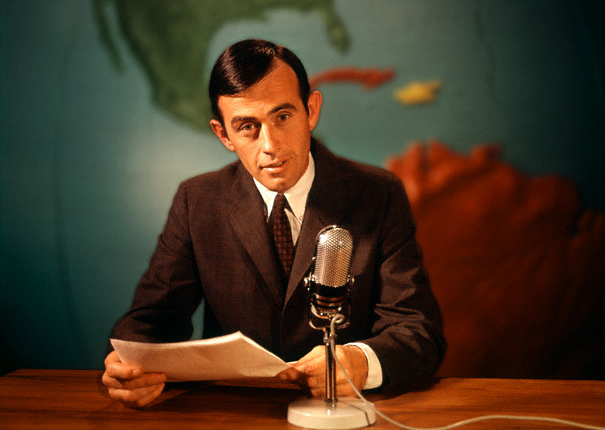
    1960s Reporter Reading News Into Microphone With Global Map In BackgroundSince we’ve been talking about media this week, first about the supposed demise, then about what’s coming next, I thought we should talk about how we, as government communicators, can use the new media to help work with the old media. And it’s happening already. Some enterprising government folks are way ahead of you, and they’re reaping the benefits.

    We all know about the Boston Police Department during the Boston Marathon bombings and manhunt, and Emily Rahimi at FDNY, but there are lots of more examples of social media to help work with the media. That’s right, not just get information to the public, but actually facilitate working with the media, and one of my favorite examples comes from one of my favorite people on Twitter, Erica Creech, from the Cleveland Department of Public Safety:

    On the morning of the press conference, Creech said, “we were trying to create a distribution list from all these media that were calling, and there just wasn’t time to create it. We said, ‘Well, let’s not waste any more time — let’s get something out and see if it works.’ ”

    She got set up for the press conference, then began going through the DPS Twitter account to follow journalists and outlets who wanted to send her a direct message asking for credentials. (Twitter requires both parties follow each other so they can message privately.)

    My local Red Cross Communications guru, Dave Schrader, regularly uses social media to drum up media interest:

    A local university PR guy used it to direct media looking for quotes on breaking news, which is great, especially for topics that the reporters aren’t familiar with:

    Our good friend Marcus did the opposite by trying to manage media expectations:

    https://twitter.com/MDeyerin/statuses/337763590310354944

    PR News interviewed Los Angeles County CEO Director of Public Affairs, David Sommers, earlier this year and found that he uses Twitter not only to engage with the media, but also to prep his office for what might be coming down the pipe that day:

    PR News: What can PR Pros do with Twitter and LinkedIn to boost their media relations efforts?

    Sommers: Our recent efforts have really focused on Twitter—using it as a monitoring platform to listen in on what the high-propensity reporters routinely covering County issues are saying about us, or about issues we are involved in. We’ve built several private lists in Twitter of reporters and media outlets of interest to us, and we strategically engage them. If I see what they’re writing about, I look for opportunities to connect them with a subject-matter expert. Anyone can find similar opportunities to engage. Look for ways to make a reporter’s job easier. Anticipate their needs. Twitter is a powerful resource for anticipating the needs of the media.

    I love that final quote. Because news rooms are getting buffeted by financial storms (kind of like us!), isn’t it in our best interest to try to make it easier on the media to find us, to report positively on us, to help them out a bit? Not explicitly quid pro quo, but hey, man, I’m here for you, why don’t you take a second to listen to my pitch? Can’t hurt, right?
  • The Rise of the New Media

    ESO_AW_logo_b_cFollowing up on yesterday’s post about the exceptional opportunity afforded to people willing to embrace a new form of media, I wanted to talk a bit about what that new kind of media will look like. And I’m going to do it using the voice of the Gray Lady herself, the New York Times.

    Recently, the Times has published a few articles that look, almost in awe, at the rise of public figures and non-traditional news entities using social media to avoid the traditional media. The first article that caught my attention was titled (appropriately enough), Who Needs Reporters?:

    For her big announcement last week, Michele Bachmann neither convened a news conference nor waited for some other moment when she was in public, reporters and television cameras nearby.

    She went for something less extemporaneous than any of that, packaging the declaration that she wouldn’t seek a fifth Congressional term in a lacquered online video. It could easily have been mistaken for a campaign ad, with lighting that flattered her, music to her liking and a script that she could read in as many takes as she desired. There was no risk of stammer or flop sweat, no possibility of interruption from reporters itching to challenge her self-aggrandizing version of events.

    The reporter bemoans this, saying:

    [The] videos […] simply ratchet up the effort to marginalize naysaying reporters and neutralize skeptical reporting. And as Chris Lehane, a Democratic political strategist, pointed out to me, they take a page from corporate America, whose chieftains have used that same format, as opposed to news conferences or interviews, to distribute sensitive communiqués.

    Over time it seems they’ve mellowed when confronted with this new reality, become more accepting. David Carr, writing for the Media and Advertising section, says:

    The business disruption in the media world caused by the Internet has been well documented. But a monopoly on scoops, long a cherished franchise for established and muscular news organizations, is disappearing. Big news will now carve its own route to the ocean, and no one feels the need to work with the traditional power players to make it happen.

    The article then goes on to talk about Glenn Greenwald’s unique position as a newsbreaker and how the media was caught unawares by the NSA snooping story (Between you and me, I don’t know how you can call the Guardian a non-traditional news source.):

    “There has been an institutional bias that traditional outlets cling to — that anyone who doesn’t do the things that they do in the way that they do them isn’t doing real journalism,” Mr. Greenwald said in a phone interview. “Since nobody can say that the stories that we did are not serious journalism that has had a very big impact, the last week will forever put an end to that myth.”

    And that’s the lesson here. It doesn’t matter who is breaking the story. Whether it’s Deadline Hollywood, the Guardian, Gawker, the New York Times, or me, news will break. For all of the complaining that today’s mass media does, they’ve got just as much ability to break news as I do.

    And that’s the secret. I am the new media. You are the new media. They are the new media. Anyone can be. While the media laments their diminished (but absolutely not disappeared) role as, “breakers of news,” there are still other roles in the news-making world that they can fill. They are the ones that can tell the full story of Edward Snowden, they are the ones that can get do in-depth reporting and ferret out lies, they are the ones that can connect dots on disparate stories. Breaking news has been democratized; news reporting is still alive and well.

    That is the new media.

  • The Demise of the Media

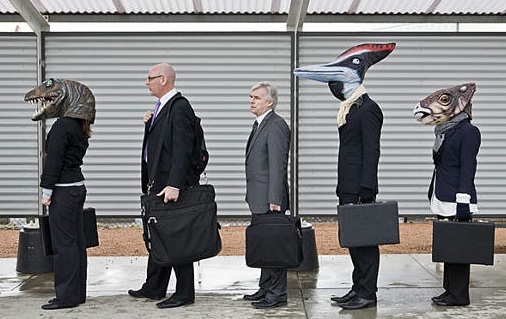
    Business-DinosaurQuick show of hands: who thinks the media is a dinosaur? Dying? Bloating and/or out of touch? Think so? I’m not so sure.

    Earlier this year, the Pew Research Center’s Project for Excellence in Journalism published their tenth annual State of the Media report. It was full of doom and gloom. Full of statistics that support all of those adjectives I used above. The first two sentences one reads on the entire website published to support the research are as follows:

    In 2012, a continued erosion of news reporting resources converged with growing opportunities for those in politics, government agencies, companies and others to take their messages directly to the public.

    Signs of the shrinking reporting power are documented throughout this year’s report.

    Talk about leading one’s audience.

    The media, acting in a completely disinterested and objective manner I’m sure, repackaged the bad news, tore at their hair and clothes and bemoaned their position.

    The public is fleeing traditional mass media. And funding and staffing is being cut left, right and center. But correlation doesn’t always equal causation. Some commenters read this report and saw these two things as separate phenomena that are feeding each other. They think that the public is fleeing traditional mass media not because of fewer reporters, but because they’ve been presented with more options, namely reporting recommended by their friends and families, shared on social media. Howard Kurtz, writing for CNN, says the solution is to come down from the white tower and engage with the public with top-quality content:

    As that balance of power shifts, media organizations are scrambling to adapt. They can no longer simply deliver the headlines from on high. They need ordinary folks to serve as their ambassadors, spreading the word about their journalism like the town criers of old.

    Hanging out in the social media playground, of course, means enduring the taunts and jeers of the crowd. That’s the price of admission.

    But the key to getting talked about and texted and retweeted is having original content. And continuing to water down the product in this age of austerity could amount to slow suicide.

    But even as positive as Mr. Kurtz’s view looks, it’s still predicated on the idea that something negative is going on, and the media needs to do something to “fix” it. Matthew Yglesias, writing for Slate, disagrees, calling this the Golden Age of American Journalism (and I agree very much with him):

    This viewpoint is not wrong, exactly, but it is mistaken. It’s a blinkered outlook that confuses the interests of producers with those of consumers, confuses inputs with outputs, and neglects the single most important driver of human welfare—productivity.

    Pew notes with alarm that just over 30 percent of poll respondents “have deserted a news outlet because it no longer provides the news and information they had grown accustomed to.” Phrased more optimistically, in a competitive marketplace content producers who don’t meet their audiences’ needs lose market share to those who do.

    Is it harder to make money as a journalist? Absolutely. But that’s a song that’s been sung by industries that have been upset by productivity gains for years centuries. Using Yglesias’ terms: phrased more optimistically, now is exactly the time for entrepreneurial and motivated folks to be in journalism; people who want to turn back the clock will suffer.