Author: Jim

  • 12 Days of SMEM: Zombies

    While the majority of the posts on our path through the 12 Days of
    SMEM will focus on what happens after a disaster, any good PIO will
    tell you that what you do before the disaster can ultimately
    determine the success or failure of your response. So I’d be doing you
    all a great disservice if I don’t at least mention one pre-disaster
    best practice. (And we’ll have another before we’re done.)

    The very best in the business of using social media in public health
    these days are our friends at the CDC. (You’ll hear that a few times
    this week.) And boy did they hit a homerun earlier this year, with a
    post by Dr. Ali Kahn on
    preparedness
    .
    Sounds boring, right? Not this one, this one had pizzazz. Pizzazz and
    zombies. (And yes, Patrice Cloutier already posted about this in his
    25DaysofSMEM post
    .)

    On May 16 this year, Dr. Kahn and his self-styled Zombie Task Force,
    published—without approval—the infamous zombie preparedness post. And
    the world reacted. 30,000 hits
    later
    ,
    the website crashed. With a bit of duct tape and chewing gum they got
    the site back up, and promptly got another 30,000 hits. Dozens of
    media mentions. Total hits in the millions. All for $87.

    And CDC did the smart thing, they kept striking while the iron was
    hot. A video contest.
    A graphic novel. An
    interview with zombie author, he writes about zombies, not is one, Max
    Brooks
    .

    Now, the grump in me will say, who cares? There is no return on this
    (ridiculously small) investment. No quantification beyond a couple of
    million website hits and Twitter Trending Topic or two. But the
    idealist in me says, I’m willing to bet that one or two dozen of those
    million people learned a bit about preparedness. Maybe one or two of
    them got ready? Maybe not. But one thing is for sure: the CDC has
    earned a ton of respect.

    Trust.

    And really, isn’t that what we, as PIOs, are really after?
  • Social Media Run Amok!

    Yesterday, the Guardian posted an amazing (seriously, I’m not exaggerating like usual) tool exploring the use of social media during the riots experienced in England this past summer.

    Go here now.

    The authors took seven rumors that circulated on Twitter during the riots and tracked their spread. They identified the first person who posted the rumor, which influential Twitter users passed the information along and showed the explosion of messages that perpetuated after those super-users posted on what were ultimately untrue rumors (and one true rumor). Some of them were easily debunked and short-lived (a tiger loose in Primrose Hill?), others that sort of simmered along for a few days (a police beating) and some that exploded into hundreds of tweets per hour over days.

    This is an amazing undertaking, with lots of interesting data and swooshy-things. Truly a must read/view.

  • 12 Days of SMEM: Joplin Tornado Response

    If you could pick out the most shocking and devastating disaster in the United States this year, it would have to be the tornado season. From the catastrophes in Tuscaloosa, Alabama and Joplin, Missouri to tornadoes in unusual places like Philadelphia, this year has been unlike any before.

    And a key part of those responses and recoveries has been the integration of social media. Take Joplin, Missouri as an example. I’ve heard stories of a Facebook fan page that was set up by a private citizen and was attracting hundreds to thousands of more followers than the the official Joplin, MO page. So the Joplin officials started posting official updates to the Page they didn’t control because getting the information out was the most important thing!

    But that’s not really public health, so let’s look at the experience of St. John’s Regional Medical Center. You know the one, direct hit by an F5 tornado? That indelible image of the twisted helicopter wreckage? There are reports that using social media and text messaging was useful in the immediate aftermath to contact families and employees, but I don’t have more information than that presented. If you know of anything, please do let me know.

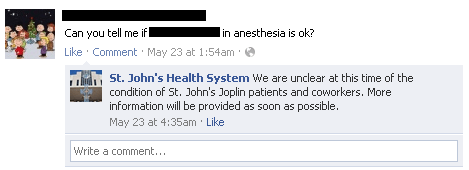
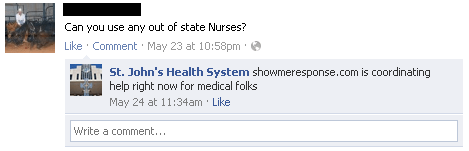
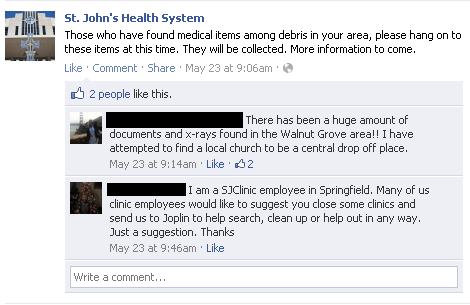
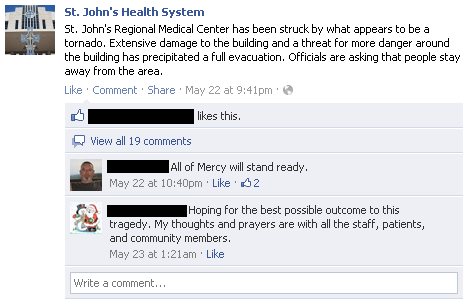
    I’d like to talk, though, about the St. John’s hospital Facebook page. It was posting updates within hours of the tornado hit and served as both a rallying point and information distribution point. Constantly updated, it was one of the positive outcomes of this disaster.

    First post: 

    1st_post

    Updates on victims:

    Looking_for_injured

    Coordinating volunteers:

    Help_needed

    Patient follow-up with contact information:

    Transfers

    Debris recovery (including personal health information):

    Medical_records

    As you can see, these posts continue throughout the night, next day and beyond. For those of us in public health that provide medical care, this could be that other tool in the toolbox that could point people who can’t wait for the next press release in the right direction for more information.