Author: Jim

  • Top Five SMEM Lessons Learned in 2012: Capture It With a Photo

    Our second lesson learned in 2012 is a big one. I think that, of all of my lessons learned, this is the one that will have the greatest reverberations in how social media is utilized in emergencies in the future. I’m trying not to overstate here but, this will change EVERYTHING.

    There are now nearly 150 million people that are ready, willing and able to photograph emergencies. People. With smartphones. Everywhere. Snapping away.

    Our first reaction is to resist this. Response agencies don’t want the public, and their smartphones, interfering with official activities. (And I’ll bet some of their reticence comes from scenes like this.)

    The problem is that research has shown this trend isn’t new, and isn’t slowing down. Nearly half of American internet users report having posted or shared images online. And they’re being encouraged by media to report from the scene of emergencies, pictures are just one part of that. Resisting this is like turning back the tide. And I’m not one to fight against the tide of history.

    So, what can we do in this new reality? Well, there are positives here.

    Emergency response typically revolves around the need to size up a situation. Look at the fire and make a decision about how to attack it. Make sure there’s a shooter on scene and deploy forces to counteract. See the symptoms and begin formulating a diagnosis. ALL of these things are image-based. Sure you can describe them by voice or convey the idea via text, but is it really the same? What is it all of those grizzled chiefs in the movies say? “I need eyes on it!” We are hamstrung, as emergency responders, by a need for visual confirmation before action can be taken. (Rightfully so, too.)

    Remember what we said above, though? 150 million people, with smartphones. Snapping away. We already have eyes on it. LOTS of eyes. And this isn’t like asking a member of the public what it looks like, “It’s a big ass fire!” This is real, actionable, ground-truth. And it’s free. (Which, in today’s austere climate, isn’t such a bad thing.)

    The examples of how this is useful are myriad and every time something blows up, there are more of them. My favorite public health example is the story of Delta 3163, which was quarantined at Chicago Midway due to fears of monkeypox. There were stories of a doctor onboard taking pictures of the rash and forwarding it to dermatologist friends for a diagnosis. The story goes that the dermatologist friends identified it as bug bites (the final diagnosis) and the doctor on board relaxed, knowing she and her fellow passengers were safe. I don’t have any confirmation of this story, but doesn’t it sound plausible?

    The real emergency that opened eyes for the power of social media images in disasters is Hurricane Sandy. We–all of us on social media–saw the storm devastate North Jersey and New York City, in real-time, in full color, in crappy Instagram filters.

    Our next step is to try experimenting with how to harness this huge pile of information and separating the wheat from the chaff. What we need to do our jobs better is out there, we just need to figure out how to use it.
  • SHES: Are You Ready?

    I haven’t written a word about last week’s events at Sandy Hook Elementary School. This will be the last thing I write about it. I just–can’t. It’s too close. It hurts too much.

    The scariest part of the whole ordeal is that something similar could happen anywhere. Big city, small town, east coast, west coast, bucolic suburb, your town, my neighborhood.

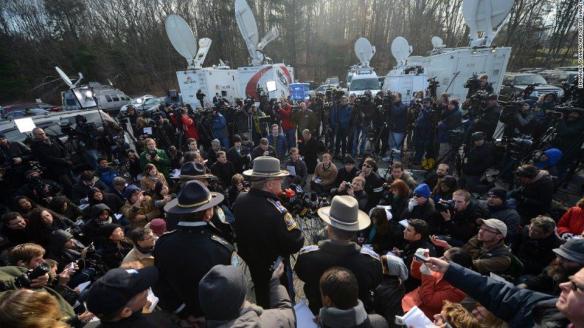
    I don’t do law enforcement or behavioral health. I do crisis communications, so professionally this image is what I need to be concerned with. Because this scene could happen, like we agreed above, anywhere. At any time. With but a moment’s notice.

    Are you ready?

    Sandy Hook Media Scrum

  • Top Five SMEM Lessons Learned in 2012: The Public Uses Social Media

    The first step in my lessons learned from seeing social media being used in emergencies this year is kind of a no-brainer. Anyone reading this either uses social media, understands social media or thinks something can be gained by using social media. So it’s kind of a cop-out, but that’s not all there is about this lesson learned.

    What’s obvious to you and me today wasn’t always this way; in fact, I got the opportunity to travel all over the country talking about social media to smart folks who still thought it was a fad or something that wouldn’t affect their responses. I could tell folks stories about Flight 1549, or crowd mapping in Haiti, or the Virginia Tech shooting, and describe how–when those things happened in their neck of the woods–they’d be forced to deal with it, too.

    I like to think I helped open the eyes of emergency managers, if not selling them on the idea, then at least making them more aware of the role of social media during the next disaster. And it seemed like every disaster this year had its social media side of the story. The culmination of this trend was during Hurricane Sandy. It seemed like the story of the Superstorm (regrettably) was the social media angle, and not the much more interesting recovery aspect. This was the disaster that finally proved to emergency managers that social media was a great and growing part of what they needed to deal with during an emergency. Not Aurora, not the March tornadoes, not the election.

    What those emergency managers who finally accepted that the world was changing found when they started researching the topic was that much of the literature surrounding the topic was already being written, and it supported what they were seeing. The American Red Cross, in addition to the development of their Disaster Operations Center, published their second survey on the use of social media by the public. But at the same time, the scholarly literature has begun to demonstrate the utility, too. Even the very useful Pew Internet and Nielsen surveys have begun demonstrating how great a change we’re undergoing.

    The why is just as important to me (sociologically trained) as the what. You can see the why in the Pew and Nielsen surveys: people use social media for everything. It’s the new water cooler; it’s the new over the back fence; it’s how we talk to family and friends anymore. And psychological research has shown us that people, in crisis situations, need to confirm that the situation is actually happening before acting. (Seriously, read The Unthinkable.) If we talk to friends and family every day online, why would we look elsewhere for confirmation of a crisis?

    The public has integrated social media into their lives. The fruits of that integration are demonstrated during every disaster anymore. Ignoring the state of the world is, for an emergency manager, tantamount to malfeasance. Our greatest lesson learned this year is that we can no longer ignore social media or keep it out of our planning.