Author: Jim

  • Get In Front Of It

    Getting in front of the story is a classic tactic by press officers and PIOs. If you don’t know what it means, it’s basically you know that some bad news is going to come out and there will be lots and lots of interest from the public and the media. NOT getting in front of the story means that the media asks the questions first and sets the stage for how you’ll respond. How would you respond to the question, “When did you stop beating your wife,” to use a classic example. Even denying the question legitimizes it being asked, and now you’re on the defensive. Getting in front of it means that you make the first statement and set the stage for what the follow up questions will be.

    This great post by Amanda Rose, posted to Comms2point0, gives a great example of how this tactic works:

    Prior to the trial beginning, we contacted the local and national media. I asked whether they would be covering the trial and talked through details of the case and the council’s involvement. We wanted to be open and upfront.

    We did the same a few weeks before the end of the trial and prior to sentencing. Building and maintaining those relationships was vital. This preparation work meant we knew exactly what media wanted and they were more positive towards us.

    This got me to thinking about what this process looks like today. Sure, press officers, media relations folks and PIOs still do this, managing the media, but could we do it with social media?

    And the answer is, of course you can! I would argue it’s much easier to set the stage for future questions–easier to get ahead of the story–with a forward-thinking social or digital media manager for a number of reasons. First, it’s a much lower bar for publication. A tweet should be correct and right and vetted and approved, but does it rise to the level of a press release or an official press statement? There are no quotes needed, no setting the stage, no assembling a gaggle of reporters. Just write it, get it approved and post.

    The second reason gets back to the linked article:

    Relationships with journalists were just as important.

    Every press officer will tell you that their relationships with the media are worth their weight in gold. But our audience these days isn’t just the media. It’s everyone. Members of the public can drive just as much interest and traffic and media interest as members of the media can. So managing our relationship with the public is JUST as important as managing our relationship with the media. By posting regularly to social media channels, we can get ahead of the story that the public will concoct. We can influence how they react to the bad news. But that won’t happen if we’re ON social media. And USING social media. And being seen as a RESOURCE by the public. That’s how you get ahead of the story today.
  • DMCA Takedowns

    Here’s a weird one. By now everyone’s heard that public health, as a field, has some problems with certain segments of society. There are those out there that don’t believe what we say. Vaccines, abortions, raw milk, heck some folks even think that all medical interventions are sinful. And these folks will do anything to try to–in their estimation–save lives.

    Traditionally, it’s been very protest oriented and open. But there’s a new tactic they’ve been employing that is much more dastardly, and something we should be aware of. It’s got to do with social media “reporting” tools. The first example is from the Times of Israel and talks about Facebook:

    In an attempt to silence pro-vaccine voices on Facebook, [the Australian Vaccination Network] went back over old posts and reported for harassment any comment that mentioned one person’s name specifically. Under Facebook’s algorithm, apparently, mentioning someone’s name means that if the comment is reported it can be seen as violating community standards. Which is particularly ironic, since many commentators, when replying to questions or comments from an individual, would use that individual’s name out of courtesy.

    Apparently, most of the people who were reported received twelve hour bans because the Facebook algorithm doesn’t pick sides, just–boom-ban stick. And truthfully, a twelve-hour ban isn’t THAT big of a deal, just a childish annoyance (of course, as family members communicate more and more online, it could end up being a huge deal).

    Much more seriously is this article from Boingboing.net about Digital Millennium Copyright Act (here in the US) takedown notices being issued based upon a complainant not agreeing with the content:

    The producers of “House of Numbers” have used a series of bogus copyright takedown notices to get Youtube to remove Powers’s videos, in which he uses clips from the documentary as part of his criticism, showing how they mislead viewers and misrepresent the facts and the evidence. It’s pure censorship: using the law to force the removal of your opponents’ views.

    The real crux of the matter lies here:

    The DMCA’s takedown procedures have no real penalty for abuse, so it is the perfect tool for would-be censors.

    There’s nothing we can do about it. And do you really have the time in your busy public health job to fight back against this? Unfortunately, I don’t have a solution right now. But it’s definitely something to be aware of.

  • Show Me What You’re Talking About

    So it’s been a little snowy this winter in the Mid-Atlantic States. (Understatement of the year, thus far.) One of the major lessons we’ve learned this winter is that snow, in a time, place and amount that is unexpected or unusual equals disaster. One only needs to look at Atlanta’s response to their recent snowfall to see what I mean.

    Here in Philly, we’re pretty good at snow even though there was a ton of it this year. We’ve got snowplows and snow emergency routes and a well-oiled social media response (including the phenomenal #NoSavesies Twitter effort). One part of the response is always to make sure that people don’t park on snow emergency routes, which are primary arterials that are plowed clean first to allow for emergency response vehicles to get through.

    During every snow emergency, City and quasi-City agencies remind folks to get off those streets:

    https://twitter.com/PhilaParking/statuses/425716432203042816

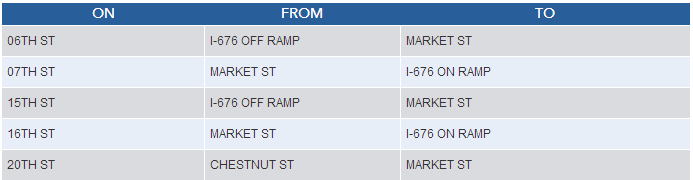
    Which is a great way to get folks attention. Here’s the direct link (since the one there seems to be broken). But, for those of you who won’t click through, this is what that page looks like:

    street list

    And it goes on and on and on like that. How helpful is that? I’d argue not very.

    On the other hand, some City agencies tweeted this out:

    https://twitter.com/PhilaStreets/statuses/425719763277320192

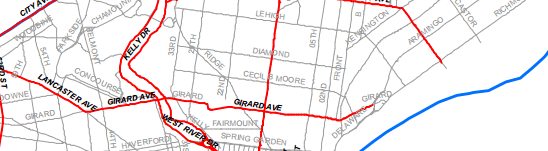
    For those of you who won’t click through, it’s a PDF map of Philadelphia with the snow emergency routes highlighted:

    map

    Which is MUCH easier to navigate and understand. If you’re parked on a red line, move your car. But couldn’t it be better? Zoomable? More Google Maps-ish? I wonder.

    And that really brings me to the crux of the matter. How much of the documentation does your agency produce look like the first picture? Sure, there’s probably some clip-art or stock photos usually, but is it really that different? Couldn’t we make it a bit more friendly, readable, understandable? For most of our content, I imagine we could. Philly is working on that, as you can see in the map image. Kudos there, honestly.

    But think ahead. Is a PDF map the absolute best way to go? Probably not, what with the huge rise in mobile internet browsing (especially among urban minorities). PDFs rarely render well on a phone, and even if they did, how much do you have to scroll around to find where you are? How much pinch-and-zooming in heavy winter gloves do you have to do?

    Improvement is one thing. Getting up to readable is essential. But thinking about usability (both how usable something is and how people will actually use it) and the future of how information is presented will do wonders for your agency. Isn’t it time you were the leader in some field?